Deconstruction Led Me Back to Jesus
After spending nearly a decade deconstructing Christianity, questioning faith, Scripture, and the resurrection, I didn’t expect where the journey would lead. This is the story of how doubt, evidence, and honest investigation led me back to taking Christianity seriously again.
What Happens When You Follow Your Doubts All the Way Down?
What do you do when the faith you’ve given everything to stops making sense?
I’ve been sitting with this question for nearly a decade now. And if you’ve ever found yourself caught between belief and disbelief—still caring about Jesus, still drawn to the questions, but no longer feeling at home in the Christianity you inherited—I want you to know you’re not alone.
For eight years, I hosted a podcast called Almost Heretical. It started as a small project born from burnout and disillusionment, and it grew into something I never expected. Millions of downloads. Thousands of messages from people who felt less alone because someone was finally saying the quiet part out loud.
That chapter mattered deeply to me. But something has shifted. And I want to tell you about it honestly.
When Everything You Were Given Starts to Wobble
About ten years ago, I a wall. I was living in San Francisco, planting churches with my friend Francis Chan, trying to live what I believed was a relentlessly radical version of Christianity.
I had assumed that if I gave everything to God, I would feel close to him. Grounded. Confident.
Instead, I felt tired. Disillusioned. Unsure of what I actually believed anymore.
So I stepped back. I needed space to slow down and reflect. After a couple of years of processing, Almost Heretical was born out of that moment.
Here’s what I want to be clear about: deconstruction is often portrayed badly by Christian leaders—as rebellion, bitterness, or a desire to just tear everything down. That wasn’t my experience. For me, deconstruction was an honest process driven by a desire to understand. It’s what happens when inherited answers stop working for you.
If you’ve watched someone go through deconstruction, or gone through it yourself, you probably recognize the pattern. You start pulling on one thread, and pretty soon the whole system begins to wobble.
Things that once felt solid start to feel fragile. Often, what you’re actually losing aren’t the core Christian claims themselves, but versions of Christianity that developed much later—interpretations specific to your tradition, confident explanations handed to you by a leader or teacher, or just church culture assumptions.
Those ideas may have been treated as definitive and settled. Over time, they became part of your identity. So when they fall, it can feel like everything is falling.
Even if what’s really happening is that you’re discovering how much of your faith was built on assumptions you didn’t know were there.
The Open, Unsettled Space
Almost Heretical became the place where my unraveling happened in real time. Over the years, dominoes started to fall—slowly and sometimes painfully.
Eventually, I reached a point where I wasn’t sure what I believed anymore. Not just about Christianity, but about what ultimately grounded meaning and purpose in life.
Deconstruction often leads to a season where old frameworks are gone, but nothing solid has replaced them yet. It’s not necessarily despair, but it’s a kind of open, unsettled space.
I still admired Jesus. I still valued the community and the ethics. But I no longer believed the central claims of Christianity—including that the resurrection had actually happened.
At that point, I honestly thought Christianity was over for me.
What Shifted Everything
Here’s where my story takes an unexpected turn.
What began to change things wasn’t stepping away from deconstruction. It was continuing to deconstruct. I kept digging. I kept asking harder questions. I followed my doubts as far as they would go.
And over time, I started to notice something uncomfortable.
Some of the conclusions I was being encouraged toward also required a blind faith of their own.
I wasn’t compelled by many of the explanations I was hearing. They didn’t make much better sense of the historical or textual evidence I was starting to discover. In some cases, I found myself being asked to adopt new assumptions about reality, meaning, and human experience that felt just as unexamined as the ones I had let go of.
I had also become aware that within parts of the deconstruction space I had helped create, there was often an understandable but real tilt toward explaining Christianity specifically away.
Whenever I notice strong motives driving conclusions, it makes me want to slow down. Examine those conclusions more carefully. Rather than simply inherit them.
And as I did, I started running into evidence I hadn’t really been taught to look at before. I didn’t even know much of it existed.
Falling Down the Rabbit Hole
I began listening to historians, philosophers, scientists, and biblical scholars who took these questions seriously.
They weren’t asking me to turn off my brain.
What struck me wasn’t that this was all completely new—I had heard pieces of it before. But for most of my life, I hadn’t paid much attention to the evidence side of things. Partially because I was so focused on trying to live radically for Jesus. And honestly, I kind of assumed that people who needed to know the foundations were somehow weaker in their faith.
But I hadn’t spent much time actually engaging the real scholarship. The historical work. The newer research that serious scholars have been producing and refining over the last several decades.
Once I started digging, I felt like I was falling down a deep rabbit hole.
And I loved it.
It sparked that part of myself that’s always wanted to understand how things work. I’ve been that way since I was a kid—whenever my family got new appliances, I’d ask for the old ones so I could take them out to my shop in the garage, open them up with my tools, and see what was going on inside.
I didn’t want to just break things. I wanted to understand how they worked, why they worked, and how anyone could be confident they worked in the first place.
That curiosity never left me. And it’s exactly what drove me deeper into the historical foundations of Christianity.
What I Found in the Earliest Sources
The more I studied the New Testament historically, the more it read like people doing their best to describe something they believed they had actually witnessed.
Not polished myths. Not abstract theology.
Accounts rooted in real places, real people, and public events—told with the kinds of awkward and inconvenient details you probably wouldn’t invent if you were trying to create a legend.
So many details. Distances. Elevations. Naming statistics. Details that other ancient texts and other religious documents simply don’t have.
At the same time, I was also engaging arguments for the existence of God that I had previously dismissed without really understanding them. Questions about the beginning of the universe. The fine-tuning of physical constants. The staggering amount of information encoded in DNA.
Christianity didn’t begin as a feeling-based belief system. It began as a claim about history.
From the start, it was rooted in things that were said to have happened out in the open—in real places, to real people, in public. The earliest Christian writings talk about names you could check, cities you could visit, roads people traveled, events that were public enough to be disputed if someone wanted to dispute them.
In other words, it presents itself as a story about something that either happened in history or didn’t.
From Doubt to Trust
For years, I think I couldn’t honestly say the early Christian creed that Paul quotes in 1 Corinthians 15. But after my research and deep dives, I think I can now:
“For what I received I pass on to you as of first importance: that Christ died for our sins according to the Scriptures, that he was buried, that he was raised on the third day according to the Scriptures, and that he appeared to Cephas and then to the Twelve. After that, he appeared to more than five hundred of the brothers and sisters at the same time. Then he appeared to James, then to all the apostles, and last of all he appeared to me also.”
I’m not claiming absolute certainty. But I am quite sure now.
This confidence doesn’t mean I think every theological system or doctrine developed over the last 2,000 years is automatically right. It doesn’t mean I suddenly have simple answers about salvation, hell, or how everything works.
I don’t have that.
What I keep coming back to are the earliest claims of the earliest Christians: that Jesus is Lord. That he was raised. That this event means something real has happened in the world.
Beyond that, Christians have done a lot of thoughtful work trying to understand what those claims mean. And I’m excited to keep working through those questions with humility—to see what’s possible.
FAQs
What is deconstruction, and is it always bad? Deconstruction is the process of questioning and re-examining the beliefs you were given. It’s not inherently bad—it’s often an honest response when inherited answers stop working. The question isn’t whether to examine your faith, but where that examination leads you and whether you’re willing to follow the evidence wherever it goes.
Can you be intellectually honest and still be a Christian? Absolutely. Christianity began as a claim about historical events, not just personal feelings. The earliest Christians invited scrutiny and pointed to evidence. Faith, rightly understood, isn’t a blind leap—it’s trust grounded in good reasons.
What if I’m still in the middle of doubting everything? You’re welcome here. Doubt isn’t the opposite of faith; it’s often the pathway to a more honest and grounded faith. The goal isn’t to shut down your questions but to follow them courageously and see where they lead.
More Episodes

What Did the Early Church Believe About the Cross? The Atonement Before Penal Substitution
The early church view of the atonement was bigger than guilt and legal payment. The first Christians proclaimed rescue, not a courtroom.

Are the Gospels Historically Reliable? What the Evidence Shows
Lydia McGrew on the evidence for Gospel reliability that most Christians have never been shown.
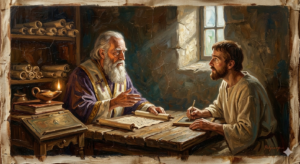
What Happened After the Apostles Died? How Polycarp Bridges the Gap
Polycarp bridges the gap between the apostles and the rest of church history. The chain is shorter than you think.
Premium Membership
Get the full, unedited version of every interview, plus video, and help Faith Lab reach more people who need it.
JOIN PREMIUM